mirror of
https://github.com/mrdbourke/pytorch-deep-learning.git
synced 2026-11-27 06:07:09 +00:00
fix -typos
This commit is contained in:

1 file changed
+5
-5
@@ -30,11 +30,11 @@
|
||||
"\n",
|
||||
"## Who uses PyTorch?\n",
|
||||
"\n",
|
||||
"Many of the worlds largest technology companies such as [Meta (Facebook)](https://ai.facebook.com/blog/pytorch-builds-the-future-of-ai-and-machine-learning-at-facebook/), Tesla and Microsoft as well as artificial intelligence research companies such as [OpenAI use PyTorch](https://openai.com/blog/openai-pytorch/) to power research and bring machine learning to their products.\n",
|
||||
"Many of the world's largest technology companies such as [Meta (Facebook)](https://ai.facebook.com/blog/pytorch-builds-the-future-of-ai-and-machine-learning-at-facebook/), Tesla and Microsoft as well as artificial intelligence research companies such as [OpenAI use PyTorch](https://openai.com/blog/openai-pytorch/) to power research and bring machine learning to their products.\n",
|
||||
"\n",
|
||||
"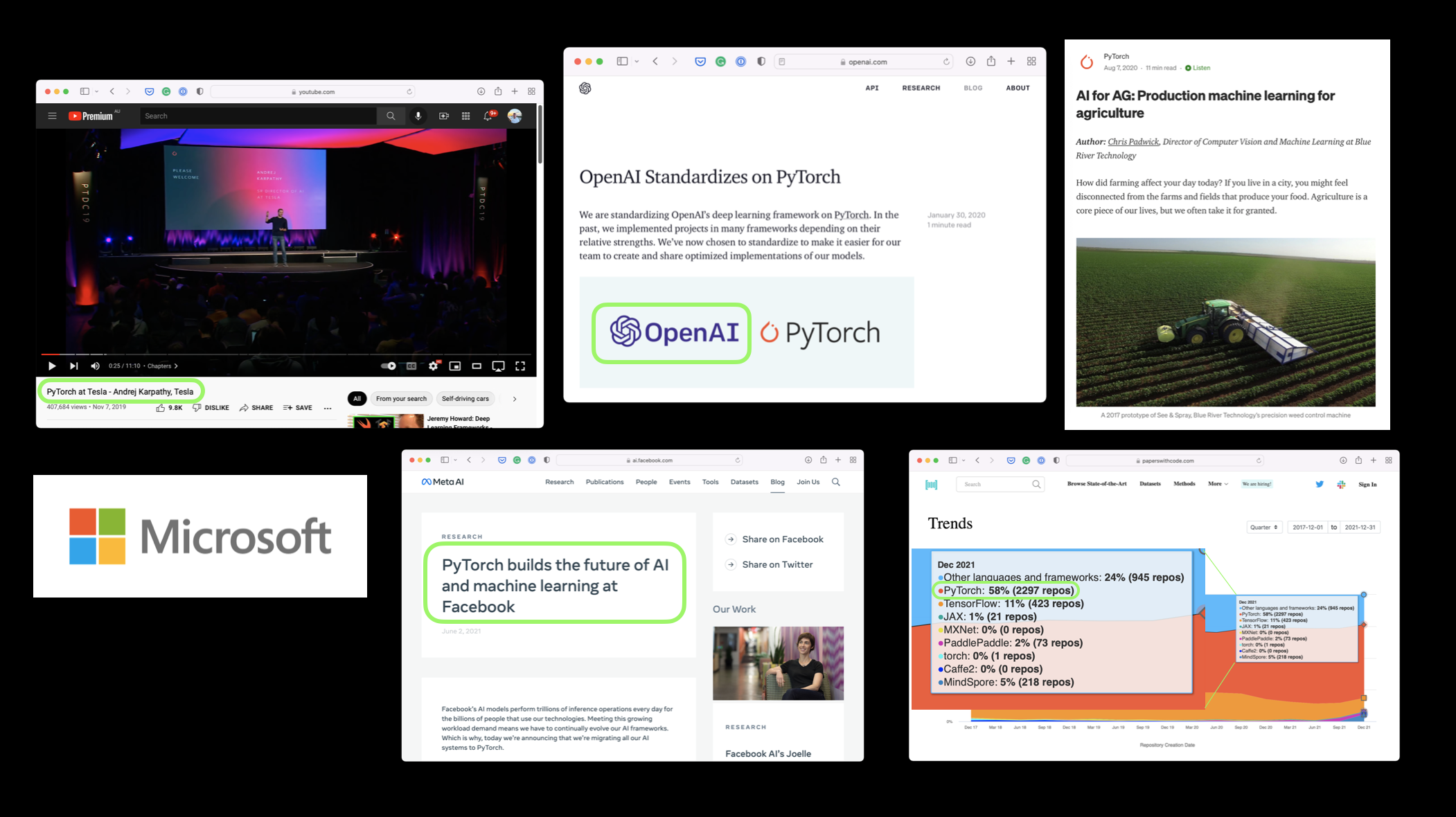\n",
|
||||
"\n",
|
||||
"For example, Andrej Karpathy (head of AI at Tesla) has given several talks ([PyTorch DevCon 2019](https://youtu.be/oBklltKXtDE), [Tesla AI Day 2021](https://youtu.be/j0z4FweCy4M?t=2904)) about how Tesla use PyTorch to power their self-driving computer vision models.\n",
|
||||
"For example, Andrej Karpathy (head of AI at Tesla) has given several talks ([PyTorch DevCon 2019](https://youtu.be/oBklltKXtDE), [Tesla AI Day 2021](https://youtu.be/j0z4FweCy4M?t=2904)) about how Tesla uses PyTorch to power their self-driving computer vision models.\n",
|
||||
"\n",
|
||||
"PyTorch is also used in other industries such as agriculture to [power computer vision on tractors](https://medium.com/pytorch/ai-for-ag-production-machine-learning-for-agriculture-e8cfdb9849a1).\n",
|
||||
"\n",
|
||||
@@ -66,7 +66,7 @@
|
||||
"| **Creating tensors** | Tensors can represent almost any kind of data (images, words, tables of numbers). |\n",
|
||||
"| **Getting information from tensors** | If you can put information into a tensor, you'll want to get it out too. |\n",
|
||||
"| **Manipulating tensors** | Machine learning algorithms (like neural networks) involve manipulating tensors in many different ways such as adding, multiplying, combining. | \n",
|
||||
"| **Dealing with tensor shapes** | One of the most common issues in machine learning is dealing with shape mismatches (trying to mixed wrong shaped tensors with other tensors). |\n",
|
||||
"| **Dealing with tensor shapes** | One of the most common issues in machine learning is dealing with shape mismatches (trying to mix wrong shaped tensors with other tensors). |\n",
|
||||
"| **Indexing on tensors** | If you've indexed on a Python list or NumPy array, it's very similar with tensors, except they can have far more dimensions. |\n",
|
||||
"| **Mixing PyTorch tensors and NumPy** | PyTorch plays with tensors ([`torch.Tensor`](https://pytorch.org/docs/stable/tensors.html)), NumPy likes arrays ([`np.ndarray`](https://numpy.org/doc/stable/reference/generated/numpy.ndarray.html)) sometimes you'll want to mix and match these. | \n",
|
||||
"| **Reproducibility** | Machine learning is very experimental and since it uses a lot of *randomness* to work, sometimes you'll want that *randomness* to not be so random. |\n",
|
||||
@@ -501,7 +501,7 @@
|
||||
"id": "LhXXgq-dTGe3"
|
||||
},
|
||||
"source": [
|
||||
"`MATRIX` has two dimensions (did you count the number of square brakcets on the outside of one side?).\n",
|
||||
"`MATRIX` has two dimensions (did you count the number of square brackets on the outside of one side?).\n",
|
||||
"\n",
|
||||
"What `shape` do you think it will have?"
|
||||
]
|
||||
@@ -697,7 +697,7 @@
|
||||
"\n",
|
||||
"And machine learning models such as neural networks manipulate and seek patterns within tensors.\n",
|
||||
"\n",
|
||||
"But when building machine learning models with PyTorch, it's rare you'll create tensors by hand (like what we've being doing).\n",
|
||||
"But when building machine learning models with PyTorch, it's rare you'll create tensors by hand (like what we've been doing).\n",
|
||||
"\n",
|
||||
"Instead, a machine learning model often starts out with large random tensors of numbers and adjusts these random numbers as it works through data to better represent it.\n",
|
||||
"\n",
|
||||
|
||||
Reference in new issue
Block a user