mirror of
https://github.com/mrdbourke/pytorch-deep-learning.git
synced 2026-11-27 06:07:09 +00:00
Merge pull request #1074 from pritesh2000/gram-1/00
00_pytorch_fundamentals.ipynb
This commit is contained in:

1 file changed
+12
-12
@@ -30,11 +30,11 @@
|
||||
"\n",
|
||||
"## Who uses PyTorch?\n",
|
||||
"\n",
|
||||
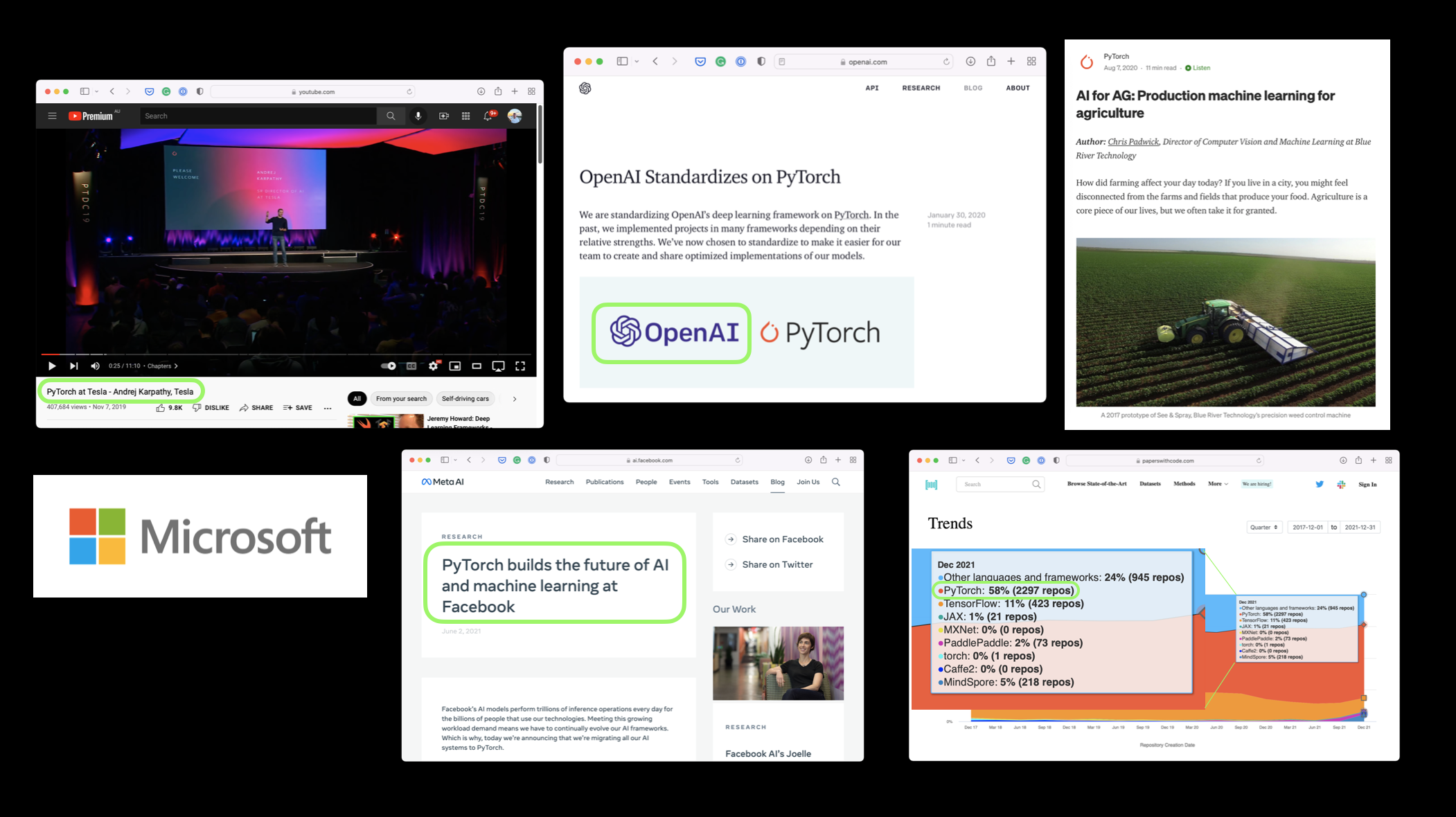
"Many of the worlds largest technology companies such as [Meta (Facebook)](https://ai.facebook.com/blog/pytorch-builds-the-future-of-ai-and-machine-learning-at-facebook/), Tesla and Microsoft as well as artificial intelligence research companies such as [OpenAI use PyTorch](https://openai.com/blog/openai-pytorch/) to power research and bring machine learning to their products.\n",
|
||||
"Many of the world's largest technology companies such as [Meta (Facebook)](https://ai.facebook.com/blog/pytorch-builds-the-future-of-ai-and-machine-learning-at-facebook/), Tesla and Microsoft as well as artificial intelligence research companies such as [OpenAI use PyTorch](https://openai.com/blog/openai-pytorch/) to power research and bring machine learning to their products.\n",
|
||||
"\n",
|
||||
"\n",
|
||||
"\n",
|
||||
"For example, Andrej Karpathy (head of AI at Tesla) has given several talks ([PyTorch DevCon 2019](https://youtu.be/oBklltKXtDE), [Tesla AI Day 2021](https://youtu.be/j0z4FweCy4M?t=2904)) about how Tesla use PyTorch to power their self-driving computer vision models.\n",
|
||||
"For example, Andrej Karpathy (head of AI at Tesla) has given several talks ([PyTorch DevCon 2019](https://youtu.be/oBklltKXtDE), [Tesla AI Day 2021](https://youtu.be/j0z4FweCy4M?t=2904)) about how Tesla uses PyTorch to power their self-driving computer vision models.\n",
|
||||
"\n",
|
||||
"PyTorch is also used in other industries such as agriculture to [power computer vision on tractors](https://medium.com/pytorch/ai-for-ag-production-machine-learning-for-agriculture-e8cfdb9849a1).\n",
|
||||
"\n",
|
||||
@@ -66,7 +66,7 @@
|
||||
"| **Creating tensors** | Tensors can represent almost any kind of data (images, words, tables of numbers). |\n",
|
||||
"| **Getting information from tensors** | If you can put information into a tensor, you'll want to get it out too. |\n",
|
||||
"| **Manipulating tensors** | Machine learning algorithms (like neural networks) involve manipulating tensors in many different ways such as adding, multiplying, combining. | \n",
|
||||
"| **Dealing with tensor shapes** | One of the most common issues in machine learning is dealing with shape mismatches (trying to mixed wrong shaped tensors with other tensors). |\n",
|
||||
"| **Dealing with tensor shapes** | One of the most common issues in machine learning is dealing with shape mismatches (trying to mix wrong shaped tensors with other tensors). |\n",
|
||||
"| **Indexing on tensors** | If you've indexed on a Python list or NumPy array, it's very similar with tensors, except they can have far more dimensions. |\n",
|
||||
"| **Mixing PyTorch tensors and NumPy** | PyTorch plays with tensors ([`torch.Tensor`](https://pytorch.org/docs/stable/tensors.html)), NumPy likes arrays ([`np.ndarray`](https://numpy.org/doc/stable/reference/generated/numpy.ndarray.html)) sometimes you'll want to mix and match these. | \n",
|
||||
"| **Reproducibility** | Machine learning is very experimental and since it uses a lot of *randomness* to work, sometimes you'll want that *randomness* to not be so random. |\n",
|
||||
@@ -501,7 +501,7 @@
|
||||
"id": "LhXXgq-dTGe3"
|
||||
},
|
||||
"source": [
|
||||
"`MATRIX` has two dimensions (did you count the number of square brakcets on the outside of one side?).\n",
|
||||
"`MATRIX` has two dimensions (did you count the number of square brackets on the outside of one side?).\n",
|
||||
"\n",
|
||||
"What `shape` do you think it will have?"
|
||||
]
|
||||
@@ -697,7 +697,7 @@
|
||||
"\n",
|
||||
"And machine learning models such as neural networks manipulate and seek patterns within tensors.\n",
|
||||
"\n",
|
||||
"But when building machine learning models with PyTorch, it's rare you'll create tensors by hand (like what we've being doing).\n",
|
||||
"But when building machine learning models with PyTorch, it's rare you'll create tensors by hand (like what we've been doing).\n",
|
||||
"\n",
|
||||
"Instead, a machine learning model often starts out with large random tensors of numbers and adjusts these random numbers as it works through data to better represent it.\n",
|
||||
"\n",
|
||||
@@ -984,7 +984,7 @@
|
||||
"\n",
|
||||
"Some are specific for CPU and some are better for GPU.\n",
|
||||
"\n",
|
||||
"Getting to know which is which can take some time.\n",
|
||||
"Getting to know which one can take some time.\n",
|
||||
"\n",
|
||||
"Generally if you see `torch.cuda` anywhere, the tensor is being used for GPU (since Nvidia GPUs use a computing toolkit called CUDA).\n",
|
||||
"\n",
|
||||
@@ -1901,7 +1901,7 @@
|
||||
"id": "bXKozI4T0hFi"
|
||||
},
|
||||
"source": [
|
||||
"Without the transpose, the rules of matrix mulitplication aren't fulfilled and we get an error like above.\n",
|
||||
"Without the transpose, the rules of matrix multiplication aren't fulfilled and we get an error like above.\n",
|
||||
"\n",
|
||||
"How about a visual? \n",
|
||||
"\n",
|
||||
@@ -1988,7 +1988,7 @@
|
||||
"id": "zIGrP5j1pN7j"
|
||||
},
|
||||
"source": [
|
||||
"> **Question:** What happens if you change `in_features` from 2 to 3 above? Does it error? How could you change the shape of the input (`x`) to accomodate to the error? Hint: what did we have to do to `tensor_B` above?"
|
||||
"> **Question:** What happens if you change `in_features` from 2 to 3 above? Does it error? How could you change the shape of the input (`x`) to accommodate to the error? Hint: what did we have to do to `tensor_B` above?"
|
||||
]
|
||||
},
|
||||
{
|
||||
@@ -2188,7 +2188,7 @@
|
||||
"\n",
|
||||
"You can change the datatypes of tensors using [`torch.Tensor.type(dtype=None)`](https://pytorch.org/docs/stable/generated/torch.Tensor.type.html) where the `dtype` parameter is the datatype you'd like to use.\n",
|
||||
"\n",
|
||||
"First we'll create a tensor and check it's datatype (the default is `torch.float32`)."
|
||||
"First we'll create a tensor and check its datatype (the default is `torch.float32`)."
|
||||
]
|
||||
},
|
||||
{
|
||||
@@ -2289,7 +2289,7 @@
|
||||
}
|
||||
],
|
||||
"source": [
|
||||
"# Create a int8 tensor\n",
|
||||
"# Create an int8 tensor\n",
|
||||
"tensor_int8 = tensor.type(torch.int8)\n",
|
||||
"tensor_int8"
|
||||
]
|
||||
@@ -3139,7 +3139,7 @@
|
||||
"source": [
|
||||
"Just as you might've expected, the tensors come out with different values.\n",
|
||||
"\n",
|
||||
"But what if you wanted to created two random tensors with the *same* values.\n",
|
||||
"But what if you wanted to create two random tensors with the *same* values.\n",
|
||||
"\n",
|
||||
"As in, the tensors would still contain random values but they would be of the same flavour.\n",
|
||||
"\n",
|
||||
@@ -3220,7 +3220,7 @@
|
||||
"It looks like setting the seed worked. \n",
|
||||
"\n",
|
||||
"> **Resource:** What we've just covered only scratches the surface of reproducibility in PyTorch. For more, on reproducibility in general and random seeds, I'd checkout:\n",
|
||||
"> * [The PyTorch reproducibility documentation](https://pytorch.org/docs/stable/notes/randomness.html) (a good exericse would be to read through this for 10-minutes and even if you don't understand it now, being aware of it is important).\n",
|
||||
"> * [The PyTorch reproducibility documentation](https://pytorch.org/docs/stable/notes/randomness.html) (a good exercise would be to read through this for 10-minutes and even if you don't understand it now, being aware of it is important).\n",
|
||||
"> * [The Wikipedia random seed page](https://en.wikipedia.org/wiki/Random_seed) (this'll give a good overview of random seeds and pseudorandomness in general)."
|
||||
]
|
||||
},
|
||||
|
||||
Reference in new issue
Block a user